View what the 2026 conference has in store below. Our expert speakers from NASCAR, Pirelli, The Goodyear Tire & Rubber Company, South Carolina Port Authority, Revvo Technology, Product Stewardship Institute and MORE have critical macro and micro insights to share.
Please note: Anything marked with an * is subject to change


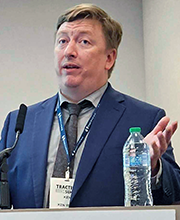
Josh Guilliams, Vice President of Consultancy, leads Smithers’ technical consulting team based in Akron, Ohio. Josh manages client relationships and works with other Smithers experts on complex projects. He also conducts in-depth investigations of a wide variety of rubber materials and final products on behalf of clients.
Before joining the team at Smithers, Guilliams spent several years in leadership at Polymer Valley Chemicals, Inc., as Technical Director and Vice President of Technical Operations. Prior to his time at Polymer Valley Chemicals, he held technical and commercial roles at Hankook Tire, EASTMAN Chemical Corporation, LANXESS Corporation, and Bridgestone Americas Tire Operations.

With a diverse background in environmental law, policy, communications, non-profits, and business, Andy provides a unique perspective on strategy and execution for realizing sustainability impacts. He holds a B.A. from the University of Virginia, a M.S.E.L. from Vermont Law School, and J.D. from Case Western Reserve University School of Law.


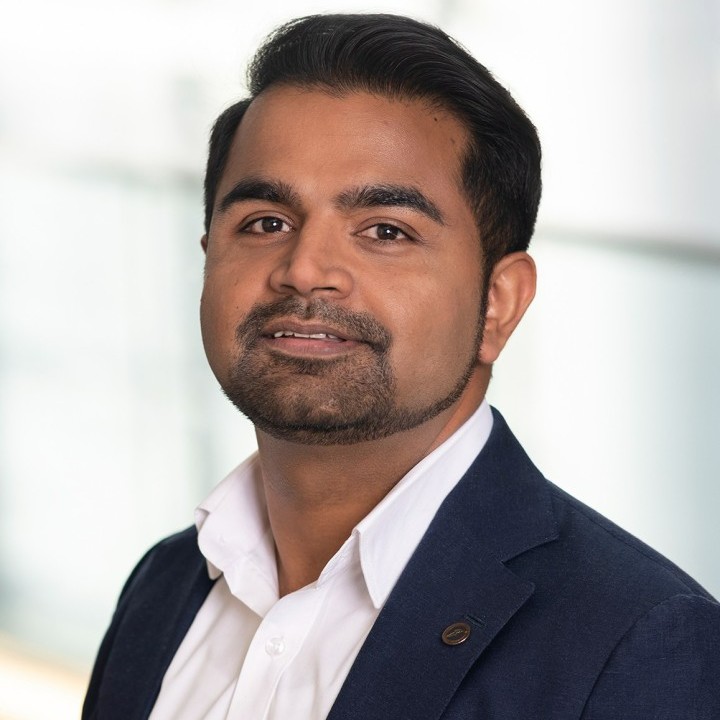
Sunjay Dodani is the CEO and co-founder of Revvo. He is responsible for driving the company’s strategy and product vision with the mission of enabling every tire to be smarter and more connected. Prior to Revvo, Sunjay led the product team at Medallia, an enterprise software company, where his team developed and launched the first machine learning based products at
the company. Prior to Medallia, Sunjay founded Advanced Neuro Navigation Systems where he developed brain navigation systems used by neurosurgeons during deep brain stimulation surgeries for patients with Parkinson’s disease. He earned his Ph.D., M.S., and B.S. degrees in biomedical engineering and electrical engineering from the University of Michigan.

David Johansen has 27 years of experience in the tire industry, with expertise in tire design, testing and simulation, and manufacturing process control. David holds Bachelor of Science and Master of Science degrees in Mechanical Engineering from Michigan Technological University.


After her MSc., started as a researcher in polymer tribology and rubber engineering at various Institutes for 2 years. Later worked as a researcher and lab manager in the R&D unit of ‘Iran Tire Manufacturer Co’ for 4 years. Obtained a Ph.D. degree “Cum laude” and graduated a Professional Doctorate in Engineering also “Cum laude”; Continued for one year post-doc; worked at VMI group Holland as compound testing expert and process specialist in the R&D department for one year. Currently leads the department of rubber processing and tire technology in the R&D unit of VMI Group.


Darla Arians leads EPR policy and program development across packaging, EV batteries and other product categories at PSI, working with producers, brands, and policymakers in more than 40 states. She served as Colorado's EPR Lead for implementation of the state's packaging EPR law (HB22-1355) and brings 20 years of hands-on experience in the waste and resource recovery industry. At PSI, Darla led a six-month national harmonization task force with more than 100 multi-stakeholder participants to align and update packaging EPR best practices across states. She offers a practical, cross-sector perspective on what compliance looks like as programs mature.

Bio to come!


Eric Pierce is a Principal Engineer covering the Smithers Winter Test Center in Brimley, Michigan, and the Treadwell Research Park in Pearsall, Texas. He specializes in overseeing engineering projects related to winter testing, wet traction, tire buffing, noise testing, on- vehicle testing, and quality. He has specific expertise in wet and winter traction testing for passenger, light truck, and truck tires. He has previously worked as a Lab Manager for the Center for Tire Research at Virginia Tech. Eric is a member of ISO Workgroup 8 for measuring snow and ice grip performance, the SAE Truck and Bus Military Industry Tire Task Force. He is Co-Chair of the Industry Advisory Board for the Center for Tire Research, and subchairman for the ASTM F09.10 Tires Committee on Equipment, Facilities, and Calibration. He earned his Bachelor of Science in mechanical engineering from Virginia Polytechnic Institute and State University.


Jay is the Director of Standards and Regulations for Continental Tire, the Americas located in Fort Mill, SC. He is responsible for all tire regulatory and standardization work throughout North and South America and represents Continental within numerous industry organizations including the Rubber Manufacturers Association and the Tire and Rim Association. Jay has been with Continental for over 15 years with leadership roles in product development, technical product management and racing development. He holds a degree in Mechanical Engineer from Clemson University - home of the 2016 College Football National Champions.

Kanwar Singh is the program manager responsible for the tire intelligence algorithm development efforts at The Goodyear Tire & Rubber Company. Singh obtained his master's degree in mechanical engineering from Virginia Tech, USA, and later completed his MBA degree from the Luxembourg School of Business, Luxembourg. He currently leads a global team of engineers whose primary responsibility is to create and implement algorithms that cater to Goodyear's current and future needs in the areas of autonomous driving, connected cars, electrification and smart mobility. Over the past decade, Singh has been at the forefront of intelligent tire research, resulting in him holding over 40 US patents.
Frank Bowers is a Technical Service R&D Lead Lab Technician at Orbia Vestolit in Ohio, focusing on PVC technical services and community STEM education engagement. He is based in the Cleveland, OH area and works on specialized lab testing, including support for FutureFit PVC developments.
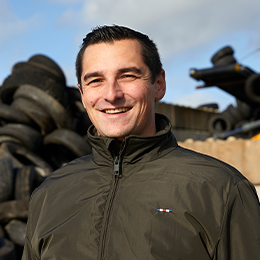
Arthur Wagner is the CEO of both REGOM and TC Environnement, a site that sorts and recycles used tires using REGOM’s identification and sorting machine. Wagner has a background in business and finance and began his career by founding his own company in the food industry. Leveraging this experience, Wagner co-founded REGOM and has successfully led the company for the past four years. After more than 8 years in this industry and under his leadership, REGOM has become a key player in the tire recycling industry, expanding its operations to Europe, Asia and North America.


Travis Frank leads the Business Development team for SC Ports, working to grow and diversify the cargo base in South Carolina.
Travis joined SC Ports in 2020 and has served in multiple roles within the Marketing and Sales department. He works closely with existing industry, but his primary focus is on recruiting new business to the state.
Travis attended North Carolina State University where he earned a bachelor’s degree in business administration with a concentration in Finance and a minor in Economics.
Travis is active in various organizations. He serves on the Trident United Way Board of Directors and also represents SC Ports on the South Carolina Economic Developers’ Association Board.


Dr. Eric Jacuzzi is NASCAR's Vice President of Vehicle Performance, overseeing aerodynamics and safety innovations, particularly focusing on preventing cars from going airborne, a role he took on after extensive engineering experience with teams and a strong academic background in aerospace engineering. He leads the development of new safety features like the A-Post flap for the Next Gen car, working to increase liftoff speed and keep vehicles grounded, leveraging advanced techniques like CFD and wind tunnels.

With over 40 years of experience in the tire industry, Ian plays a key role in guiding product development, ensuring performance, safety, and innovation in alignment with North American market demands.
Ian began his career with Pirelli in the United Kingdom, where he held various roles in Quality , Product Design and Compound Development. After completing multiple expatriate missions throughout the Group he moved to North America in 2014. He has led several major projects focused on ultra high-performance and all-season tires, including original equipment fitments for premium and electric vehicles.
Under his leadership, Pirelli has developed and expanded its North American portfolio as well as its capacity to manufacture within the region from the facilities in Rome, Georgia and Silao Mexico.


Ilkka Lehtoranta around two decades of experience in the tire R&D. He has been building a unique concept to offering R&D activities to industry. He has successfully lead development of various new products and innovations with multiple customers and projects. Mr. Lehtoranta is currently Head of Tire and Material Development in Black Donuts.


Bio to come!


Dan Andrei Anton is the founder of Autoadmin Consulting (T.A. Unleashed Engineering), a company focused on streamlining R&D workflows for smart tire technologies in electric and next‑generation vehicles. With a degree in automotive engineering and over 18 years of experience in CAE, he has collaborated with leading automotive organizations including BMW Group, Lear, Boshoku Automotive, Goodyear, Linglong, and Kumho.
Andrei’s expertise spans automotive systems engineering, virtual product validation, and advanced finite element analysis (FEA). Over his career, he has developed testing models, simulation methods, and automation frameworks for validating passive safety systems and emerging smart tire technologies. His work supports both short‑ and long‑term R&D programs for global OEMs and Tier‑1 suppliers.
In 2024, his startup was recognized as Best Startup at ROTSA Demo Days in Transylvania, highlighting the innovation trajectory of his efforts in intelligent tire systems and engineering automation.

Russell Shepherd is the Technical Communications Director for passenger car tires and has more than 20 years of experience with Michelin.
He started his career with the company in product research with Earthmover and Passenger Car tires, working in France. During this time, he received three patents for developing some of Michelin’s most innovative tires. After six years in France, Russell transitioned to the United States, where he managed tire engineering teams for North America passenger car tires.
After his assignments in research and development, Russell spent six years in Corporate Development before taking his current role with the company.
Before joining Michelin, Russell spent four years at General Motors. He has a bachelor’s degree in Mechanical Engineering from Florida A&M University and a master’s degree in Mechanical Engineering from Georgia Tech.
Michelin, the leading mobility company, is working with tires, around tires and beyond tires to enable Motion for Life. Bringing its expertise to new markets, the company is investing in high-technology materials, 3D printing and hydrogen to serve a wide a variety of industries — from aerospace to biotech.